Three grounds, three different jobs
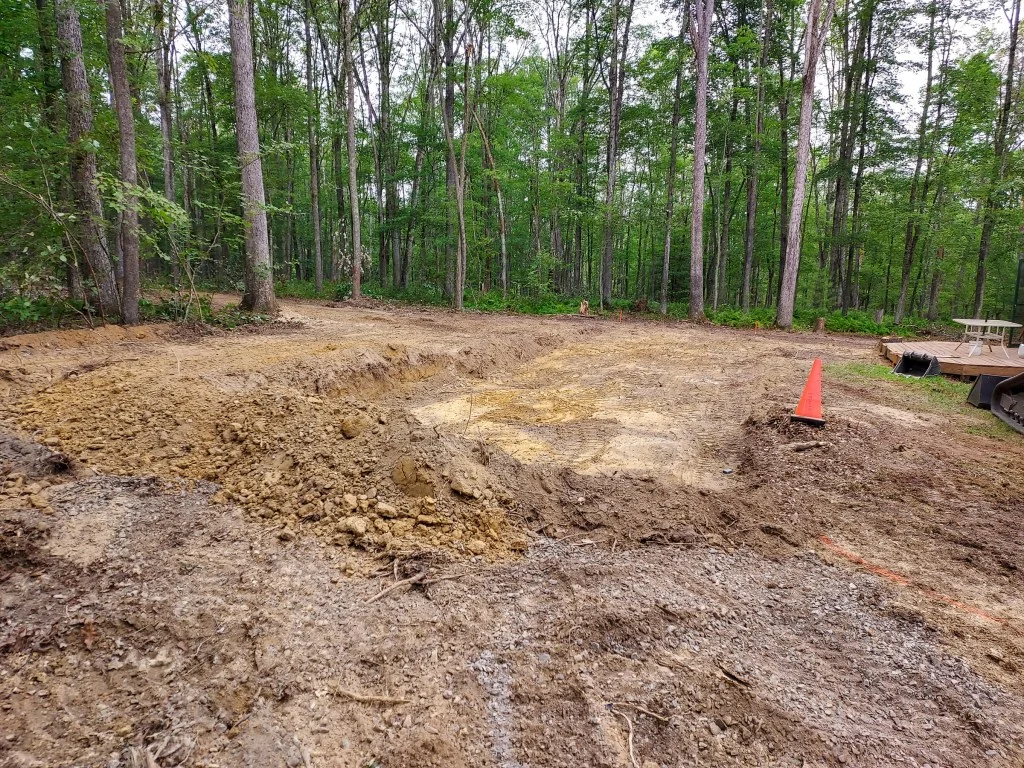
Clyde sits in the flats and lower benches along the Pigeon River, in the shadow of Haywood County ridges, and that geography hands a site crew three completely different problems on lots that are often minutes apart. Red clay bottom ground holds water and pumps under a track machine, so a pad there is a drainage job as much as a dirt job. Higher benches and the toes of the ridges turn up shallow rock, where the question stops being how much dirt to move and becomes how much rock has to come out or be built over. And a lot of the town's older parcels carry fill from an earlier house, a driveway, or a leveling job nobody documented — fill that looks fine in July and moves in February.
None of these are unusual. What matters is that a pad cut for clay is a bad pad on rock, and a pad priced off a phone call is a guess. The first real deliverable is a look at the ground and a plan for where water goes once the pad is flat.
Walk a handful of Clyde lots in one afternoon and you can hit all three. A parcel off a river road may sit on soft bottom ground that never dries out; climb a few hundred feet to a bench lot and the machine starts ringing off rock within the first bucket; drop back into town and you're on a lot that was graded decades ago with whatever fill was handy. That spread is why two neighbors on the same road can get pad quotes thousands apart, and why the only honest way to price the job is to put a machine or a probe in the ground before the number is firm.
Haywood County's terrain reinforces the point. The county seat at Waynesville sits in a bowl ringed by ridges, and Clyde sits lower, closer to the Pigeon River's work. Water has been sorting this ground for a long time, and it left clay where it ponded, rock where it scoured, and a floodplain that still behaves like one. Building on that ground means reading it before you shape it.
What Clyde site work actually includes
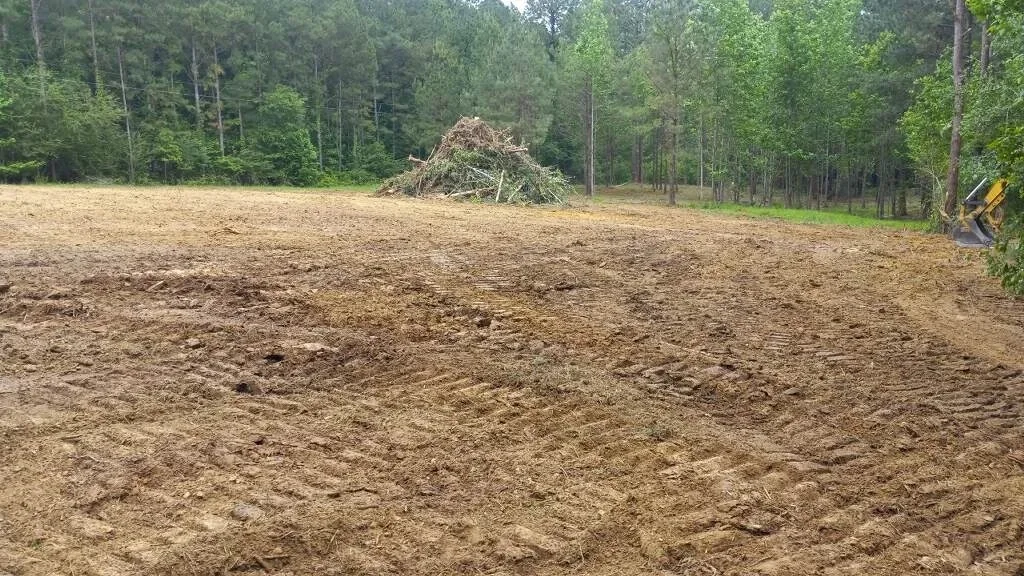
Site prep here is a sequence: clear and grub, strip the organic layer, cut to subgrade, deal with whatever the cut exposes, then build the pad up in lifts that get compacted and tested. A pad poured or built on soft clay or old fill without that sequence will settle, and the settlement shows up as cracks in a slab or a foundation that has to be repaired later. Local code and state rules treat footing and pad prep as structural, which is why the International Code Council residential provisions and the NC Licensing Board for General Contractors both matter once a job crosses the general-contracting threshold.
Drainage belongs in the same scope. Haywood County's federal disaster record is long — 19 declared events across 1973-2026, mostly storm and flood family — and the rain that gets a pad in trouble rarely arrives politely. A pad that sheds water away from the building is cheaper than a foundation repaired after the fact. If you only need the excavating side, that work is scoped on the Clyde grading page.
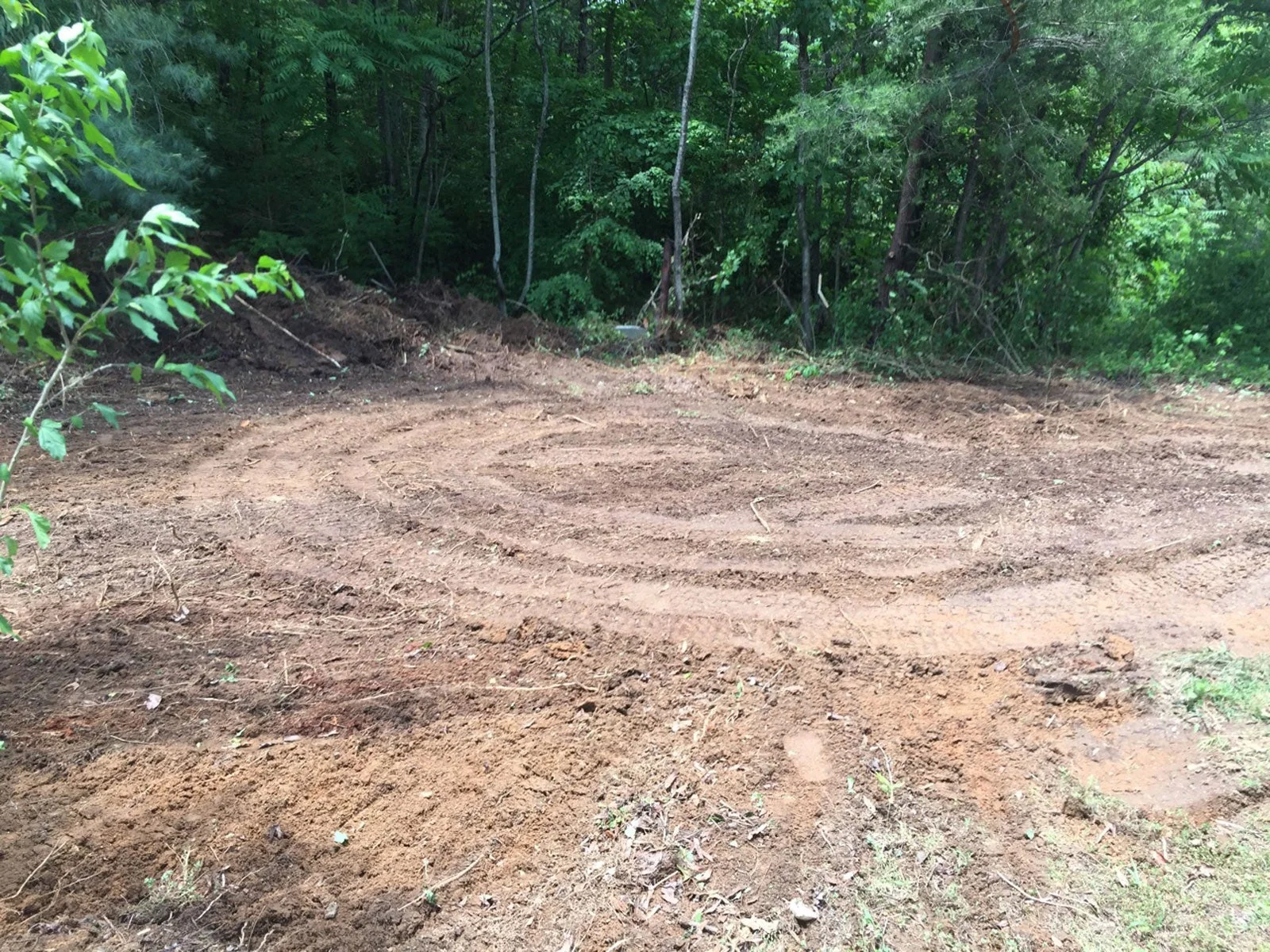
Strip depth is the first place budgets go sideways. On river-bottom ground the organic layer can run deeper than it looks, and every extra inch of muck that comes out is a load that has to leave and structural fill that has to come back. On a ridge toe, stripping is quick but the cut hits rock early, and the job shifts from hauling dirt to breaking and removing stone. Same line item on the bid, completely different day.
Compaction is the quiet part. Fill placed in thick lifts and rolled once will pass the eye test and fail a density test. The crew that places fill in thin lifts, waters and compacts each one, and can show you results is the crew whose pad is still flat in five years. That testing is cheap next to tearing out a slab, and it's the part of the scope you should ask to see written down before you sign.
Scope vs price, in rows
Ranges below are typical for residential work in and around Clyde. Steep, wooded or rocky lots trend toward the top of the band and can reach $30,000 where rock removal or retaining structure is required.
| Scope | Typical range | What moves the number |
|---|---|---|
| Small accessory pad (shed, small outbuilding) | $3,500 – $6,000 | Access for equipment, organic layer thickness |
| Standard single-family building pad, gentle lot | $6,000 – $12,000 | Cut/fill balance, compaction testing |
| Pad with drainage and retaining | $12,000 – $20,000 | Slope, rock, where runoff must go |
| Steep, wooded or rocky lot | $20,000 – $30,000 | Rock removal, haul-off, engineered fill |
The county wide picture, including hauling and clearing line items, is on the Haywood County cost page. For the full sequence from bare lot to buildable pad, see site prep and building pads.
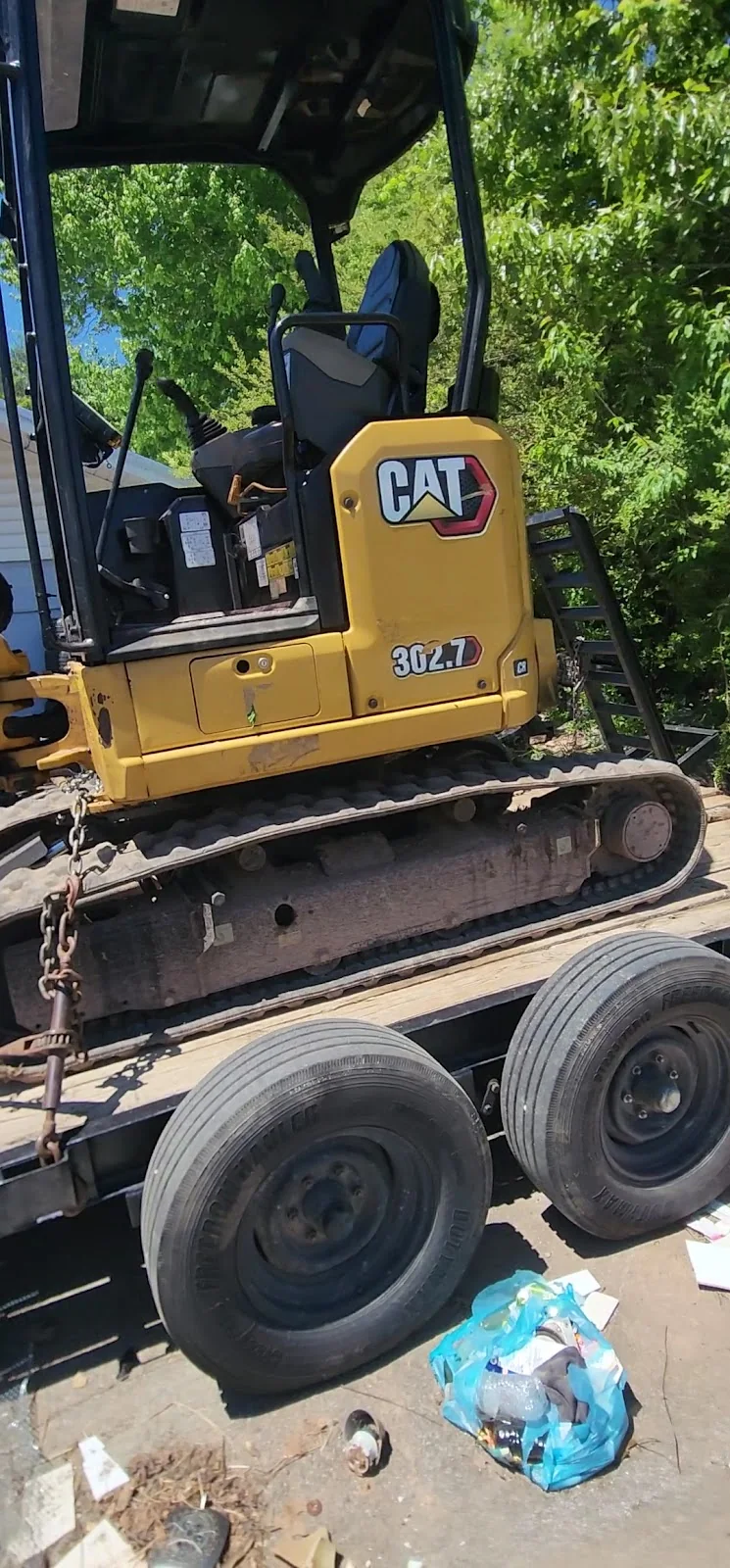
Access is the line item people forget. A lot with a wide, graded driveway already in place lets a full-size machine walk in and out all day; a lot reached through a narrow lane or over a culvert that may not carry a loaded dump truck changes the whole plan. In that case spoils may have to be stockpiled on site or hauled out on smaller trucks, and that hauling adds cost without adding a single square foot of pad. Ask about access before you compare quotes, because a low bid that assumed easy access is a bid that won't hold.
The old-fill problem on Clyde's in-town lots
Plenty of Clyde parcels inside town limits were built on decades ago, and the ground was shaped then by whatever equipment was available and whatever the owner wanted to spend. That fill is the single most common surprise on a pad job here: it tests poorly, it holds water, and it can't simply be covered with good dirt and forgotten — it has to be removed, re-compacted in lifts, or undercut and replaced. A crew that shows up and starts cutting without probing is a crew that will hand you a change order.
On the environmental side, older properties near the river corridor can carry the residue of prior uses. Where soil is disturbed on a project of any real size, the EPA framework for erosion and sediment control, plus stormwater rules, come into play — and that's before the county weighs in. Ask early, before the ground is open.
There's a practical test for old fill that costs almost nothing. Probe it with a steel rod or a hand auger in a few spots and watch what comes up: mixed debris, ash, brick fragments, or loose cinders are all signs that the ground was dumped and graded rather than built. If the rod sinks easily through a soft layer under a firmer crust, that's a buried organic seam, and it will move under a foundation load no matter how good the top looks. Finding that on a Tuesday beats finding it after the footings are in.
The fix isn't always dramatic. Sometimes the fill is shallow and only the top few feet have to come out and go back in compacted lifts. Sometimes the honest answer is to undercut deeper than planned, import clean structural fill, and pay for the extra loads. Either way, the cost shows up before the concrete, not after, and the written scope should say who pays if the fill turns out worse than the probe suggested.
Scheduling and getting a real bid
Clyde's building season is shaped by rain, not by the calendar. Spring and summer storms routinely shut down earthwork for days at a time, and wet clay is not workable — pushing a machine through it makes the subgrade worse, not better. A realistic schedule builds in weather days. The National Weather Service outlook is worth checking before agreeing to a start date in a wet month.
A bid worth signing states: how the subgrade will be proven, how fill will be placed and compacted, who handles rock if it appears, where spoils go, and what erosion control is included. Vague bids and change orders go together. Get two or three written scopes and compare line items, not totals.
Timing also interacts with the rest of the build. A pad that sits open through a wet stretch can soften at the surface and need reworking before footings go in, so the pad and the foundation schedule work best when they're planned together rather than months apart. If your builder is ready to pour in early spring, the dirt work should be finishing in the driest window you can get, not starting in it.
Finally, ask what happens to the spoils. On a lot with room, topsoil and clean dirt can be stockpiled and reused for final grading and landscaping, which saves hauling both ways. On a tight in-town lot there may be nowhere to put it, and every load leaves on a truck. Knowing that answer up front is the difference between a bid you can trust and a number that grows once the machines show up.